Online reviews are one of the most important factors for consumers’ decision making. When someone is selecting a web hosting service, software subscription, online marketplace seller or local business, reviews are often a key factor in building trust. With the growing momentum of artificial intelligence, a new challenge for consumers and review platforms comes along: AI fake reviews.
Advancements in generative AI have made it easier than ever to create realistic, convincing and scalable review content. Unlike traditional fake reviews, which are easy to identify with bad grammar or repetitive language, real customer reviews are very similar to AI generated reviews.
These are AI generated fake reviews. (Fakespot)
What Are AI Fake Reviews?
These fake reviews aren’t written by real customers, but by tools based on artificial intelligence. Modern language models are capable of producing natural, detailed and convincing text that is human-like.
AI tools can be used by companies, marketers and bad actors to:
- Write fake reviews for their own products
- Write bad reviews about the competitor
- Build Thousands of Reviews Fast
- Change words and style to evade detection
AI’s prowess for generating original content on demand means fake reviews no longer need to depend on repetitive templates or redundant language.
AI-Generated Reviews Are More Reliable
The classic fake review was easy to spot, with obvious red flags like spelling mistakes, weird phrasing, or generic observations. These signals are seriously impaired by AI-generated content.
Current AI systems are able to:
Write Naturally
"AI can write reviews that look real, and they look like a person wrote them."
Data Processing
AI can write reviews that are very positive to mildly negative, which means that fake reviews can be mixed in with the real ones.
Change Style & Tone
AI can generate reviews from very positive to slightly negative, so fake reviews can be mixed up with the real ones.
Bulk Content Production
It’s now easier than ever to manipulate on a large scale by generating thousands of unique reviews in a short period of time.
These capabilities make it so much more difficult for consumers or automated moderation systems to detect fake AI reviews.
Industries Most Affected by Fake AI Reviews
Generating fake reviews is a lucrative enterprise across many industries, but some are more exposed than others, particularly those that are fiercely competitive and depend on their online reputation.
Common targets include:
- Hosting services (web)
- Cloud services
- Online stores
- Travel and hospitality sectors
- Mobile Apps
- Consumer electronics brands
Small rating changes can influence consumer purchase decision and increase revenues in these sectors.
Threats to Consumers
Consumers trying to make informed choices face many challenges when they encounter reviews generated by AI.
Fake Reviews on Products
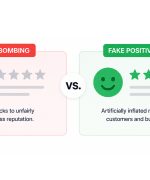
Fake positive reviews can make poor products appear trustworthy.
Comparison of Inequalities
AI can write negative reviews about your competitors, saying false things about their services.
Less Trust in the Reviews
As AI-generated fake reviews get ever more sophisticated, consumers may start to wonder if they can trust online ratings at all.
Bad Purchase Decisions
Fake reviews can trick consumers into paying for inferior products or services.
The Evolution of Review Sites
The big review sites know this is a growing problem and they are throwing massive resources at AI detection systems.
Common tactics are:
Machine Learning (ML) Based Detection
Platforms are increasingly looking beyond review text to user behaviour, posting history, device info and account authenticity.
Behavioral Assessment
Platforms are increasingly looking at not just review text but also user behaviour, posting history, device info and account authenticity.
System of Verification
Some sites require purchase verification or verified transactions before allowing reviews to be posted.
Humans, Moderated
These are often supplemented by human investigators who review suspicious activity and enforce platform policies.
They do help to restrict manipulation, but the contest between AI-generated content and detection systems continues.
Warning Signs of Phony AI Reviews
But there are some red flags that consumers should look for when it comes to AI-generated reviews.
Beware:
- Large amount of reviews in a short time span
- Positive reviews not based on real personal experience
- There are several accounts with similar review formats
- Too much nice language, not enough specific criticism
- Short history of activity of reviewer profiles
- Ratings spikes without known reason
There is no one tell-tale sign to know a review is fake, but a combination of warning signs can be a red flag.
Consumer How To Protect Yourself
Don’t depend on the review score alone in evaluating a product or service.
But then:
- Look at detailed reviews instead of just ratings
- Multi-Platform Feedback Assessment
- Reading independent forums and discussion groups
- Expert opinion and trade journal reviews
- Looking for confirmed buy signals
- On the overall reputation of the company
By cross referencing multiple sources of information, you reduce the likelihood of being duped by AI generated review manipulation.
Conclusion
AI-generated fake reviews are a big problem for consumers, companies and review sites. But never before has AI been so good at generating realistic review content on a large scale, making it more difficult than ever to spot fake reviews. Review platforms are developing sophisticated detection systems, but consumers should be wary and check information with multiple sources.



 About UsFind out working team
 AdverisementBoost your business at
 Need Help?Just send us a
 We are SocialTake us near to you,