Let’s say you are going to buy a product online. You see a company with hundreds of glowing reviews, almost all of which are five stars. All is well. But then a question comes to your mind, are these reviews really genuine?
That’s a fair question. Almost every purchase we make today is affected by online reviews. Customer feedback is a huge factor in building trust, whether you’re choosing a web hosting provider, booking a hotel, buying a gadget, or hiring a service.
The issue is not all reviews are from a real customer. Some are real experiences, others are written to influence opinions. Knowing the difference can save you money, frustration and disappointment.
We will go through the main differences between real and fake reviews, and how to spot them.
Why Do Fake Reviews Exist?
It’s all about one thing. Impression. Good reviews can improve sales, increase a company’s reputation and draw new customers. Some companies cheat by posting fake positive reviews or hiring someone else to do so .
But others post fake negative reviews to sabotage a competitor’s reputation. Bottom line? Consumers are left questioning what feedback they can truly rely on.
What Real Customer Reviews Usually Look Like
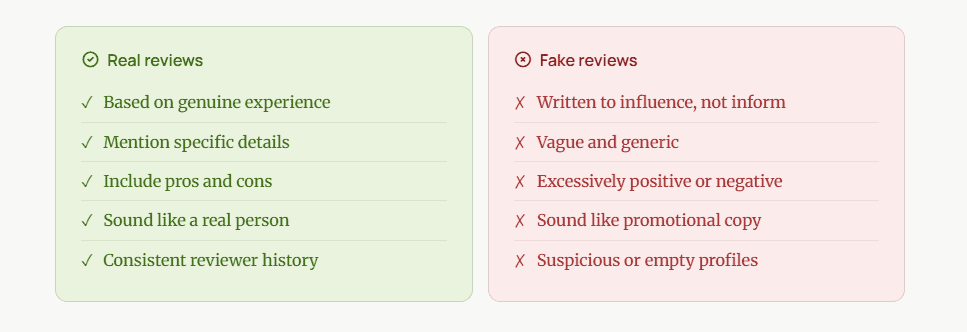
Real reviews are based on real experience so they read well. They don’t pressure you to buy anything.
They Include Specific Details
Real customers typically tell you what happened in their experience. Otherwise they talk about how fast the support team responded, how easy a product was to use or what problem it helped solve. Details make reviews credible.
They Aren't Always Perfect
Here’s something interesting, real customers will often talk about the positives and the negatives. The product may have been awesome but shipping took longer than I expected. Confusing setup process and maybe helpful customer service. And real experience is seldom perfect so balanced feedback appears more credible.
They Sound Like Real People
Most real reviews are in plain language. They may have some minor grammatical errors or personal opinions or a unique writing style. That is common. Marketing departments don’t write like real people.
Common Signs of Fake Reviews
Some fake reviews are very convincing. But a lot of them have similar patterns. Understanding the signs a company may be using fake reviews online can make these warning signals easier to spot.
1. They Sound Too Good to Be True
But beware if every sentence sounds like an ad. Watch for things like “best company ever,” “perfect experience,” or “absolutely flawless service,” with no backup info. Real customers often tell you why they liked something .
2. They're Extremely Vague
A review that just says “Awesome product!” doesn’t give you much information. Without purchase, service or experience details it’s harder to know if the review is real. The more detailed the review, the more useful it is, usually.
3. Multiple Reviews Look Almost Identical
Have you ever seen more than one review that is worded or structured in the same way? Sometimes, that’s a warning sign. If the reviews look like they are copy and pasted or written by the same person, they are suspect.
4. There's a Sudden Flood of Positive Reviews
Sometimes when a business gets dozens of five-star reviews in a matter of days, that can be a red flag. There can be legitimate reasons for a review spike but it’s worth a closer look at timing and content.
5. Reviewer Profiles Look Suspicious
And sometimes, the review is not the problem. It's the reviewer. If an account has left reviews for dozens of unrelated businesses in a short period of time, it might not be a regular customer. By looking at the reviewer’s history you can see trends that aren’t immediately obvious.
Review platforms also investigate suspicious review activity when unusual patterns are detected. In some cases, platforms may remove reviews that violate their guidelines and display notices to inform consumers about enforcement actions.


Real vs Fake Reviews: The Biggest Differences
How to Verify Reviews Before Trusting Them
You don’t have to be an investigator to see manipulation on reviews. A few simple habits make a big difference.
Read More Than Just the Top Reviews
Don’t blindly take the first few comments you see. Read positive, neutral and negative reviews for a broad view of customer experiences.
Compare Multiple Platforms
If a company gets great reviews on one platform and awful feedback on all others, that inconsistency is worth noting. It’s often better to look at a range of sources to get a clearer picture.
Focus on Patterns
One review doesn’t tell the whole story. If you hear the same thing from dozens of customers, whether it’s a benefit or a complaint, chances are that they are right.
Trust Details More Than Ratings
Star ratings are helpful, but they are only part of the picture. The rationale for the rating is often more valuable than the number.
Conclusion
The real vs fake review battle isn’t going away anytime soon. As companies continue to battle for attention online, some will always be tempted to game customer feedback. That’s why being able to spot real reviews from fake ones is such an important skill. The next time you research a product or service, don’t just look at the stars. Read the reviews very well. Attention to details, consistency and authenticity. Above all, trust your own judgement. If it looks too perfect, too repetitive, too good to be true, then it’s worth investigating. Sometimes your gut is the best review filter you have.





 About UsFind out working team
 AdverisementBoost your business at
 Need Help?Just send us a
 We are SocialTake us near to you,