Online reviews have become one of the most influential factors in consumer purchase decision making. Many consumers look at review sites before buying a product, subscribing to a service or choosing a web hosting provider to see what others experienced. Trustpilot is one of the most popular platforms of this kind. But the big question is can you really trust each and every 5 star rating you see in Trustpilot reviews?
No. There’s no one perfect review platform but Trustpilot is a great source of customer feedback and transparency. Knowing how Trustpilot works, how reviews are moderated, and what user-generated ratings can and can’t do can help consumers be smarter.
How Trustpilot Reviews Work
Trustpilot is a public review site where customers can review businesses. Companies can encourage customers to write reviews and users can write reviews themselves.
Every review contributes to a company’s TrustScore, which is clearly displayed on the company’s profile page. The firms that consistently receive positive feedback tend to score high, and the firms that get repeated complaints tend to score low.
The platform allows transparency by giving space for both positive and negative reviews. Businesses can also publicly respond to reviews, which lets them address concerns as well as show off the quality of their customer service.
The Role of Moderation Systems
Trustpilot A lot of people think that Trustpilot check every review that is posted on their website but this is not completely true. Trustpilot, like other review sites, relies on a combination of automated detection and moderation to spot suspicious activity.
Its systems are designed to identify potential fake reviews, suspicious review patterns, spam content and violations of platform rules. “If a review is flagged by an automated tool, it may be subject to further review or temporarily removed pending verification.
Users and businesses can report reviews that they think break the rules of the platform. Trustpilot will then review the report and make a decision on whether the content should stay published.
These moderation efforts help to keep the platform honest but no system can catch every fake review immediately.
Why 5-Star Ratings Can Be Misleading
High rating doesn’t always tell the whole story. There are a number of reasons why consumers should not rely on the overall score alone when evaluating Trustpilot reviews.
1. Positive Reviews May Not Represent Every Customer
We typically encourage satisfied customers to leave reviews following a successful purchase or interaction. Meanwhile, many average customers will never leave feedback at all.
This means that the overall rating might be based on a certain group of customers, not all of them.
2. Review Volume Matters
A company that has a 4.9-star rating from 50 reviews may not make you feel as confident as a company that has a 4.7-star rating from 50,000 reviews.
Where there are more reviews, you get a more balanced picture of how customers have felt over time.
3. Some Reviews May Be Biased
There is no such thing as a 100% objective review. Sometimes customers leave one very positive or negative review for one interaction and not their whole experience.
Feelings can affect ratings, so it’s important to read the written comments, not just look at the star scores.
4. Businesses Can Request Reviews
A lot of companies will actually ask for feedback from customers after a purchase. This is a legitimate practice , but it can sometimes lead to more positive reviews than would otherwise be the case . Especially if the invitations are sent to customers who had positive experiences .
How to Evaluate Trustpilot Reviews More Effectively
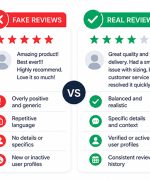
Instead of looking at the overall rating of the company, try this:
- Read the reviews (positive and negative).
- Look for repeated complaints or praise.
- See how businesses are caring for customer issues.
- Don’t just read old reviews, read the new ones.
- Check out the total number of reviews.
- Look for reviews on other review sites
Single reviews are usually less telling than patterns. Having dozens of customers complaining about the same problem can be a real problem. Likewise, frequent references to good customer service or product quality could be a sign of a pattern.
The Limitations of User-Generated Ratings
Trustpilot reviews are a good way to get a feel for the quality of a company but they are not a 100% proof of quality.
Because the rating itself is voluntary, there is an inherent ceiling to the ratings created by users. Not all customers write reviews and those that do may have their own reasons for writing a review that may affect what they write.
There are also still problems like fake reviews, attempts to game the reviews and verification constraints on review sites. The most sophisticated moderation systems still fall short of capturing the vast majority of misleading reviews.
That doesn’t mean Trustpilot reviews aren’t genuine. They should be only one part of the decision making process, along with independent research, expert opinion, product comparisons and feedback from customers directly.
Conclusion
Trustpilot is still one of the most popular review sites on the web. It adds a level of transparency between a business and consumers that is important. But, no review platform can guarantee that all the 5-star ratings are the true reflection of the reality.
Trustpilot reviews are best used as a research tool, not a final verdict. “Consumers can make better informed choices by reading detailed feedback, looking for patterns and considering multiple sources of information, rather than being led by the ratings alone,” Prof Toubia said.
Next time you see a perfect 5 stars review, think again. The real story is often in the details behind the numbers.





 About UsFind out working team
 AdverisementBoost your business at
 Need Help?Just send us a
 We are SocialTake us near to you,