Imagine what it would be like if you were shopping for a new service provider, online store or software company. You see a company with hundreds of good reviews and a good rating. That sounds like a good one. But what if some of those reviews are fake?
Fake Trustpilot reviews are an increasing problem on the internet. Consumer review sites can help consumers make better choices, but they also attract the attention of people and companies that want to shape public opinion. Knowing how review fraud works will make you a smarter shopper and less likely to be taken in by fake ratings.
Why Reviews Matter in Web Hosting and SaaS
Unlike physical products, digital services cannot be inspected before purchase. Usually customers need to subscribe first to be able to judge performance, support quality and general reliability.
This means reviews are especially important when comparing providers. Potential customers often search for reviews about:
Server performance and availability
Website loading times
Customer service responsiveness
Security features:
User Friendly
Transparent pricing
General Customer Satisfaction
Reviews help SaaS buyers to see if the software meets its promises. Many people want to see customer testimonials before they subscribe to a tool that could be a critical part of their day to day operations.
Reviews can directly impact someone’s decision to choose one provider over another, as trust is such a key factor.
What Are Fake Hosting Reviews?
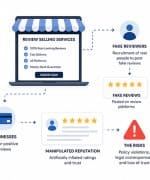
Fake hosting reviews are reviews that are not based on true customer experiences. They can be written by people who have never used the service, paid reviewers, employees of the company or third party marketing agencies.
These reviews can come in many flavors:
Fake positive reviews to improve ratings
Competitors’ negative fake reviews
Incentivized reviews with weak disclosure
Multiple reviews through fake accounts
Automated or AI generated review content
It aims, usually, to influence public opinion, not to give real criticism.
How Fake Reviews Influence Customer Decisions
Most customers will compare a number of providers before making a final decision. Of course, if one company appears to have much better ratings than another, it gets more attention.
For example, two hosting companies may have similar price and features, but one can have a rating of 4.9 stars and the other 4.4 stars. A lot of customers will go with the higher rated one without researching.
If the ratings are artificially inflated through fake reviews, then consumers could be buying services that don’t really meet their expectations.
This may lead to the following for customers:
Poor website performance
Unpredictable customer service
Other fees and charges
Security worries
Reviews that do not specify service limitations
Fake reviews lead to bad buying decisions and wasted money in these cases.
The Impact on Legitimate Companies
It’s hurting the consumer, but it’s hurting more. Fake reviews. They can also hurt honest web hosting and SaaS companies that rely on real customer feedback.
1. Unfair Competition
It can be a difficult challenge when companies manipulate reviews for companies who invest in good infrastructure, customer support and product development.
A provider with genuine reviews may not look as good as a competitor who has manipulated reviews.
2. Reputation Damage
Some companies get caught up in fake bad reviews. A few fake complaints can drag down your average rating and make potential customers wonder if you’re legit.
Bad opinions are more common and bad reputation is hard to fix.
3. Increased Marketing Costs
If competition is rigged, a business may have to spend more on advertising and brand awareness campaigns just to survive.
They don’t compete on the quality of their service, they compete on fake online reputations.
Why Some Businesses Use Fake Reviews
The web hosting and SaaS industries are very competitive. Thousands of providers competing for customers, usually with similar features and pricing.
Some businesses see fake reviews as a shortcut to growth because reviews can directly affect sales.
Some of the more common reasons are:
Improvement of brand credibility
Higher conversion rates
Increasing search visibility
Quick trust building
Getting ahead of rivals
But these near-term benefits often carry significant risk.
Risks of Review Manipulation
Every review site has its rules and is always looking for something out of the ordinary. If a business violates any of these rules, the review site will intervene and do something about it.
The possible outcomes are:
1. Review Removal
Platforms can delete a review if it is suspicious, that is, if it can be misleading or fake.
Some review sites also issue warning notices when they detect activity that violates their guidelines. These notices help to inform consumers when reviews have been removed or enforcement action has been taken.
Trustpilot also had a “Breach of guidelines” notice on the MilesWeb profile that said it had removed a number of fake reviews.Another Trustpilot profile where the platform said it took action against reviews that violated its guidelines.
2. Account Restrictions
If you’re a business owner and you violate review policies, we may restrict your account or take other actions.
3. Loss of Customer Trust
Trust is earned slowly, lost easily. Signs of manipulation review make customers doubt what the company says.
4. Legal and Regulatory Issues
Consumer protection agencies in many countries are taking a tough stance on false marketing such as false endorsement and misleading reviews.
How to Spot Fake Hosting Reviews
But it’s not always easy to spot fake reviews. Here are some red flags consumers can watch for to take feedback with a grain of salt.
Note: (read more)
Reviews that are too promotional
Many reviews with identical wording
General comments without details
Big positive jumps
Too good reviews or too bad reviews
Profiles with a history of a few reviews
Real reviews are generally about real experiences — support experiences, website migrations, uptime performance, billing issues, etc.
Conclusion
Fake hosting reviews do much more than just affect star ratings. Fake reviews can influence purchase decisions, hurt ethical businesses and undermine trust in online review sites in trust-based industries.
The best thing consumers can do is to look at the ratings and to read detailed reviews from multiple sources. The best way to create long-term success for web hosting and SaaS companies is to create trust through real customer experience.
Real feedback puts everyone on the same level so companies are forced to compete on the quality of their service, not their ability to game their reputation. In the long run transparency is good for customers and companies.
We are team of ' Delhi Startups ' , most active startup community with strict spam policy.
We are making !deas happen..for future, business and jobs without charging anything, with connecting entrepreneurs.. It's a reason to trust on us.
Come and join or subscribe, we will defiantly give a reason to like us.







 About UsFind out working team
 AdverisementBoost your business at
 Need Help?Just send us a
 We are SocialTake us near to you,