Online reviews today play a big part in determining a business. Many consumers read reviews before they buy or sign up to get a sense of what other people are saying about a product, service or web hosting company. Review platforms have thus become an integral part of the online marketplace.
But there’s one thing reviews rely on: trust. Fake or misleading reviews can swamp a platform and result in bad purchases by consumers, and harm good businesses. This is why moderation of Trustpilot is so important for the quality and credibility of reviews.
In this article, we’ll look at how Trustpilot detects suspicious reviews, the tools it uses to identify manipulation and how users and businesses can help to keep reviews authentic.
Why Review Moderation Matters
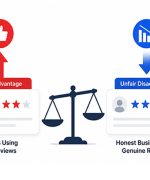
Review platforms are constantly at war. The majority of the reviews are written by real customers, but sometimes people and businesses try to game the system with fake positive reviews or unfair negative reviews.
Without proper moderation review scores can become meaningless. Consumers may lose trust in the platform and real customer reviews may be fighting against false feedback from companies.
Hence, the purpose of Trustpilot moderation is to reduce these risks through automated technology as well as community reporting and investigation processes.
Automated Detection Systems
Trustpilot’s biggest method for sniffing out fishy reviews is its automated fraud detection system.
There are review platforms out there today that are looking for all sorts of signals that could be a potential red flag. Patterns observed by systems include:
Volume of reviews in a short period
Several reviews from similar sites
Strange review pattern
Accounts that look like they were made just to write reviews
Fake or paid reviews
Automated systems are constantly scanning for new reviews, flagging activity that doesn’t appear to be normal customer activity. If a review exhibits some warning signs, it may be filtered or sent for further investigation.
The technology allows platforms to analyze millions of reviews efficiently and reduce the impact of manipulation of reviews.
Community Reporting and User Flags
No amount of technology will find all suspicious reviews. That’s why reporting tools are also an important part of moderation in Trustpilot.
Users and businesses can report reviews they believe are in breach of platform guidelines.
Reasons for reporting include, but are not limited to:
Fake customer experiences
Spam content
Swear Words
Declaration of competing interest
Bad information reviews
If a review is reported, it may be reviewed for compliance with the policies of the platform. It’s just another layer of review to get things your automated systems might overlook at first glance.
Investigating Suspicious Activity
Moderation teams could dig further into anomalous patterns found in reviews for investigation.
They look at account activity, history and if the content looks authentic. Some reviewers may be asked to provide documentation or evidence of their experience with a business.
The aim here is not to get rid of the bad reviews. All review sites need to be open to valid criticism. Moderation is really about finding outliers or reviews that seem to be intentionally misleading.
What Happens When Reviews Break the Rules?
When a review violates the platform’s policies there are a number of things you can do.
This review could be:
Not available.
Concealed temporarily during investigation.
Second confirmation raised
Permanent ban - Confirmed violations
And platforms can penalize accounts that game or abuse reviews again and again.
Reviews that do not adhere to their guidelines may lead to public notices on review sites or the removal of non-conforming reviews. They increase transparency of updates and inform users of moderation actions.
Trustpilot posted a “Breach of guidelines” notice on the MilesWeb profile saying it had removed a string of fake reviews.
Another Trustpilot profile example where the platform said it did something with reviews that broke its rules.
These actions are designed to preserve the sanctity of the review system and to create a fair playing field for consumers and businesses.
Challenges in Review Moderation
It’s not always easy to moderate based on reviews, even with sophisticated detection tools.
It can be hard to tell a real customer complaint from a fake review. Real customers can leave very emotional reviews and fake reviews can be surprisingly real.
So moderation systems have to balance two key objectives:
Blocking fraudulent content.
Keep customer feedback authentic.
Any big review site always struggles to find that balance.
Conclusion
Trustpilot reviews are still trustworthy online because of another reason: moderation. We’re dependent on a combination of automated detection systems, user reporting tools and policy enforcement and investigation processes to identify and remove suspicious reviews.
There’s no perfect moderation system, but these efforts make a big difference in improving the reliability of reviews and creating a more level playing field for businesses and consumers alike. For users, understanding how review moderation works can help make it easier to assess ratings critically and make better purchasing decisions online.
We are team of ' Delhi Startups ' , most active startup community with strict spam policy.
We are making !deas happen..for future, business and jobs without charging anything, with connecting entrepreneurs.. It's a reason to trust on us.
Come and join or subscribe, we will defiantly give a reason to like us.







 About UsFind out working team
 AdverisementBoost your business at
 Need Help?Just send us a
 We are SocialTake us near to you,